
Testing demonstrates 24% performance gains for CO₂ heat pumps and highlights need to adapt European standards
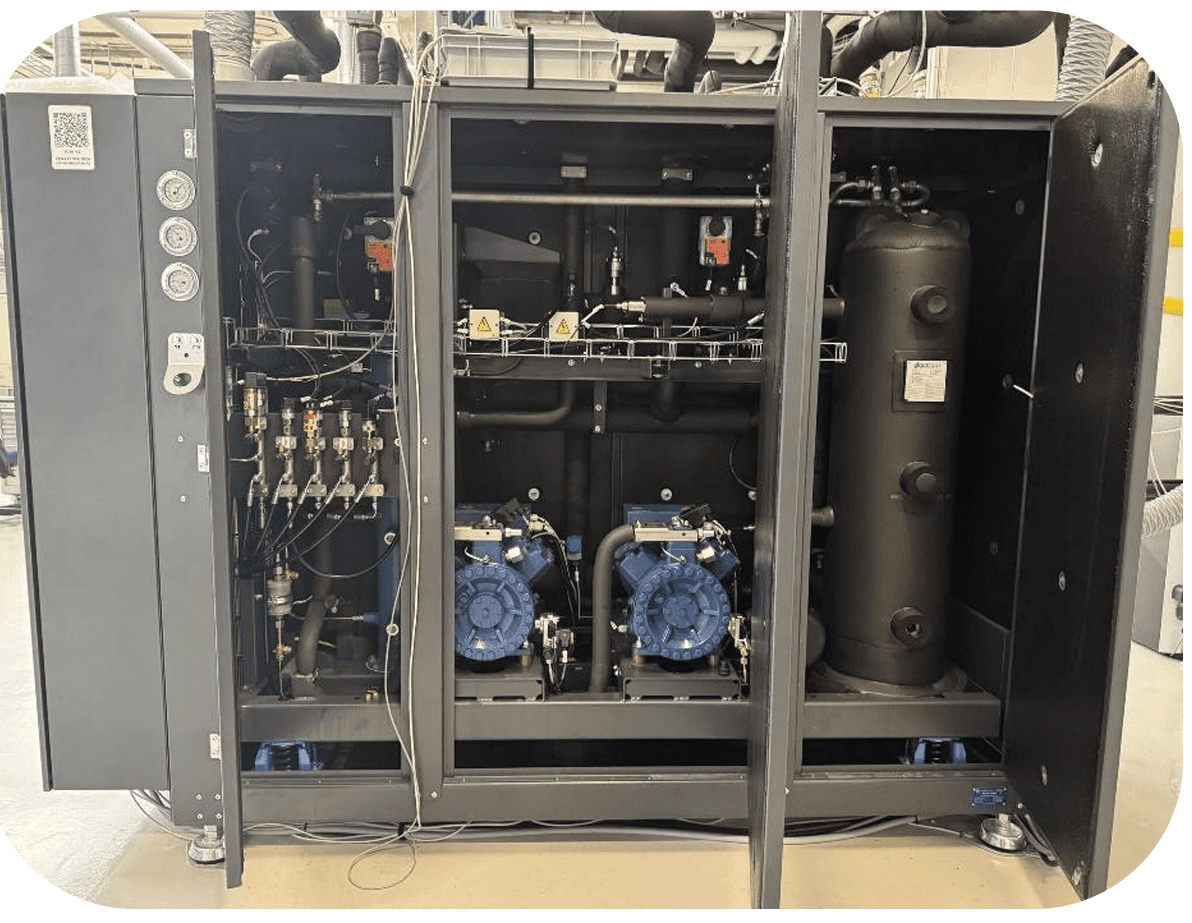
Recent laboratory testing of a CO₂ (R744) heat pump system has revealed substantial performance gains when operating conditions are aligned with the thermodynamic characteristics of transcritical CO₂ technology. The results provide strong evidence that current European performance testing standards do not reflect the efficiency potential of CO₂ heat pumps.
The tests were conducted at the Danfoss Application Development Center in Nordborg using the Sinop TripleAqua heat pump. The system was evaluated according to the methodology defined in European Standard EN 14825, while also assessing performance under alternative operating conditions better suited to CO₂ systems.
Standard performance testing conditions under EN 14825:2022 are based on small water temperature differences - typically 5 K at 35 °C and 45 °C leaving water temperature (LWT) and 8 K at 55 °C LWT. While these conditions are suitable for conventional refrigerant systems operating with a condenser, they do not reflect the optimal operating regime of CO₂ heat pumps, which use a gas cooler and typically benefit from larger temperature lifts across the water circuit.
The tests show that heating performance and efficiency is increased when the system operates with a higher ΔT of 20 K water temperature difference combined with a variable outlet water temperature strategy. Many conventional heating systems apply a ΔT of 20 K. Under such conditions, the system achieved a seasonal coefficient of performance (SCOP) of 3.56, representing a 24% performance improvement compared with the standard 5 K temperature difference used in current testing procedures.
Cooling operation was also assessed. The system reached a seasonal energy efficiency ratio (SEER) of 2.81, demonstrating stable cooling performance within the tested operating range. More relevant, as an additional finding, it was seen that domestic hot water (DHW) production during cooling mode reduces the gas cooler pressure, which in turn improves thermodynamic efficiency and overall system performance.
These findings highlight that current performance assessment frameworks - including EN 14511 and EN 14825 - do not adequately capture the real performance potential of CO₂ heat pump technology.
To address this issue, eurammon plans to establish a dedicated R744 heat pump performance rating group. The initiative aims to bring together manufacturers and technical experts to develop recommendations for improved evaluation methodologies that reflect the specific operating characteristics of CO₂ systems and support the transition toward sustainable heating solutions based on natural refrigerants.
Manufacturers and other stakeholders interested in contributing to the development of more representative testing approaches for CO₂ heat pumps are encouraged to participate in the initiative. Join us!